
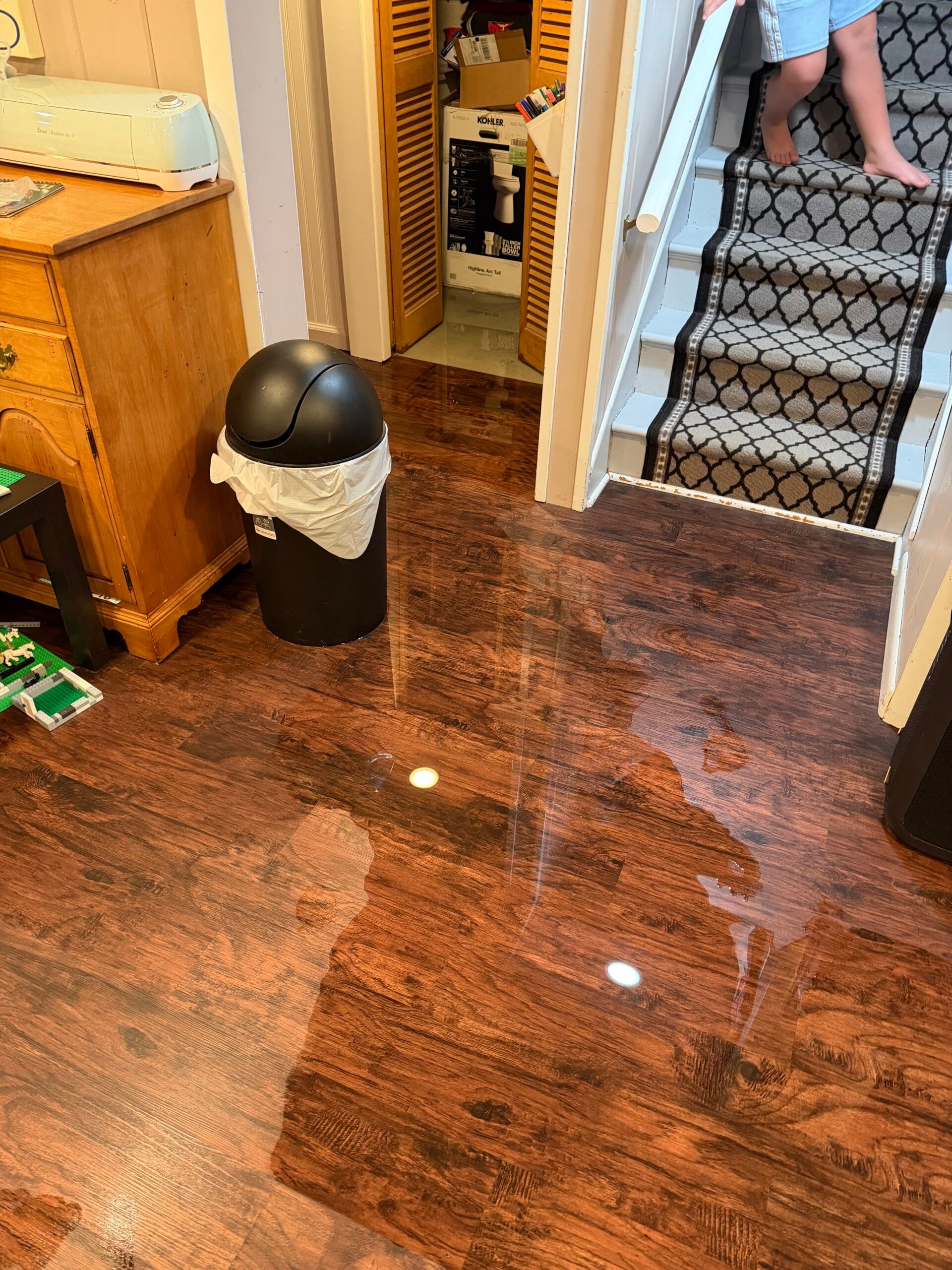

There are certain moments that stick with you, not because they’re dramatic in a movie sense, but because they’re real, messy, and unforgettable in a way you can’t unsee.
For me, one of those moments happened in my own home when I experienced a sewage backup in my basement.
It wasn’t gradual. It wasn’t subtle. And it wasn’t something you can ignore or “deal with later.”
It was one of those situations where you immediately understand two things:
- This is going to be expensive.
- This is going to be life-disrupting.
And as someone who had spent years in fire and water restoration, I knew exactly what I was looking at.
It Doesn’t Take Long for a Small Problem to Become a Big One

Sewage backup is different from a typical water issue. It’s not just about wet materials, it’s contamination. That changes everything about how it has to be handled.
What I saw in real time was exactly what I had seen on job sites for years:
- Materials that couldn’t be saved
- Immediate demolition requirements
- Containment and cleanup procedures
- The reality that “drying it out” is not an option
And emotionally, it hits differently when it’s your own space.
The One Detail That Changed Everything
The part of this story I always come back to isn’t the mess…it’s the coverage.
We had sewage backup coverage in place. And that detail completely changed the outcome.
Instead of asking, “How are we going to afford this?” the conversation shifted to:
- Who is handling mitigation?
- What needs to be removed?
- How quickly can this be restored?
That one line of coverage turned what could have been a major financial setback into a managed, supported process.
Most People Don’t Think About This Until It’s Too Late
Sewage backup is one of the most overlooked endorsements in home insurance.
And I understand why. It’s not pleasant to think about. It’s not something you expect. It’s not the kind of loss people imagine when they picture home insurance.
But in restoration work, it’s one of the most disruptive types of losses I saw—because it often affects entire finished basements, stored belongings, flooring, drywall, and sometimes even structural components.
And unlike a clean water leak, this isn’t something you can simply dry and repair. Without the right coverage, homeowners are often left choosing what they can afford to fix—and what they can’t.
Why This Matters More Than Most People Realize
When I look at insurance now, I don’t just think in terms of policies. I think in terms of outcomes.
What actually happens to a family, a homeowner, or a business owner when something like this occurs? Do they get to focus on restoration, or do they get stuck in financial stress while trying to recover?
That difference often comes down to a handful of coverage decisions made long before anything ever goes wrong.
What I Took From My Own Experience
Going through a sewage backup in my own home reinforced something I already knew from years in restoration:
Insurance is never about the premium you paid on a normal day. It’s about what happens on the worst day. And on that day, the details matter. Coverage that seems small on paper can become the most important part of your entire policy.
Final Thought
Most people never think about sewage backup coverage until they’re standing in the middle of it.
I did. And it changed the way I talk to every client today. Because insurance isn’t just about protecting a house. It’s about protecting your ability to recover when life doesn’t go as planned.
If you’re not sure if you have sewage backup coverage, contact us for a FREE insurance review.
